Table of Content
Smart speakers anchor your smart device ecosystem, enabling your smart devices from different manufacturers to connect and interact with each other. Google home is designed to look circular with three varieties Google Home Mini, Google Home and the Google Home max of Google Home hub. It has an interesting design with a white and a grey area at top and bottom respectively. The white area is sloped forms the top of the Google Home embarking LED lights to indicate that the device is on, and can listen to your voice commands. Within the limitations above, both Alexa and Google Assistant make it fairly easy to control media with your voice.
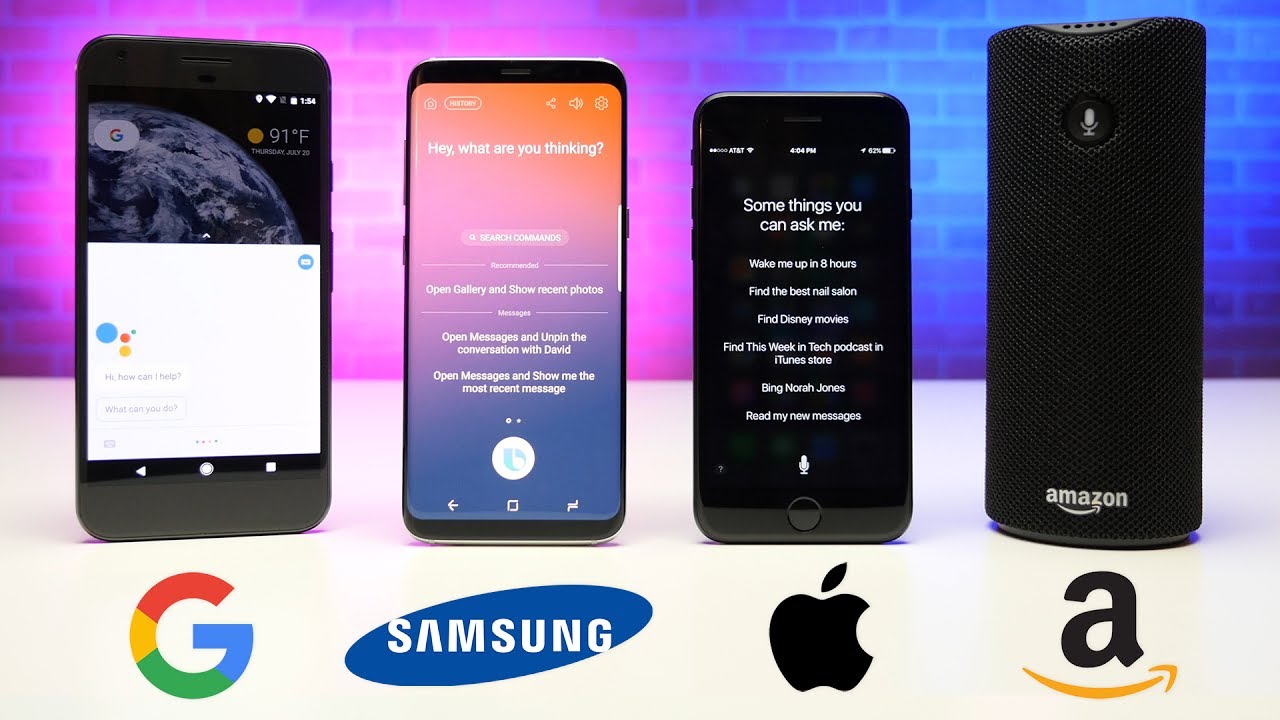
Alexa and Google Assistant are two of the leading voice assistants out there. Here's how the smart speakers that use them stack up against each other. Frankly, there's very little difference between the two right now. They're both very capable smart assistants that respond to voice commands and work well with many smart home devices.
What's the difference between Alexa and Google Home?
Now, the Echo Studio is by far the strongest in terms of sound quality, with powerful audio and the ability to fill a room with directional sound thanks to its angled drivers. However, you can't send text messages with Google Assistant without a workaround using IFTTT. Unlike Alexa, Google Assistant can make international calls, if linked to a Google Fi account or Google Voice account that has credits. In terms of being able to find and play podcasts, both assistants have improved further since our last comparison.

Having said that, Alexa tends to be better when it comes to support for a wider range of devices, as well as better smart home integration. So if you have a lot of smart home devices already, Alexa might be your best bet. Voice assistants are clever helpers that are a key part of your smart home system, responding to your instructions, serving up information and controlling your home appliances. You can talk to them from your phone or via a dedicated smart speaker, and the big benefit is hands-free control, so you can get your gadgets working without having to physically touch them. With these, you can use your voice to get internet-connected smart plugs and appliances to work together via an app on your phone or tablet, and you can control them with spoken instructions. Whether you’re asking Alexa to arm your security camera or telling Google to turn on your reading light, there’s a lot you can do with a smart assistant.
Differences: Google Home vs. Amazon Alexa
The Nest Mini may not have a clock option, but it still uses LED dots to communicate, and it’s available in chalk, charcoal, coral, and sky. Again, the build quality is excellent, and the Nest Mini’s pincushion form gives the device its own identity. Google’s recent design upgrade made the nest Mini more eco-friendly too. But, what sets it apart is the notch on its underside, which allows you to hang it on a wall. The smallest smart speaker available but one of Google's most popular. With 40 per cent stronger bass than the original Mini, the 2nd Gen Nest Mini offers a lot for its size.

In these cases, you're better off whipping out your smartphone to find the best information. Alexa doesn't place your devices on a single screen like Google—it uses buckets to categorize your smart devices. This is a bit clunkier than Google Home, since you need to select a category first before controlling an individual device. For faster access, you can group devices or add them to your favorites, which places them in an easily accessible spot on the devices tab of the Alexa app. The first Echo device with Alexa voice services hit the market in 2014—two full years before the Google Home speaker landed.
Home control capacity
While you technically can have both Google and Alexa speakers together under one roof, we think that’s more fuss than it’s worth. You’d be best off picking the one you prefer and keeping everything connected to a single platform. Once you’ve peppered a few smart speakers around the house so you can talk to them wherever you are, you’ll feel like you’re living in a sci-fi movie.
It takes voice commands as well as typed requests in the absence of a voice interface. Google Assistant was the next improvised version with AI features and it connected Google software products with hardware products. This is a capable 7-inch smart display that is ideal for controlling your home from your bedside. It doesn’t have a camera so it’s not for video calls, but it works with a lot of streaming services for watching shows or, more realistically, checking a recipe video on YouTube.
This smart speaker isn’t portable unless you don’t mind hauling a speaker that weighs 5.3kgs. It has cool features such as a self-adjusting equalizer, and it even lets you know when you’ve set the speaker incorrectly/upside down. Cooks and frequent Google app users who want to access Google Assistant via a screen will love this display, which is well-integrated with Google Calendar and Photos. One of the other search-related advantages Google Assistant offers over Alexa is the ability to track the context of your queries based on previous inputs. For instance, after you ask “Hey Google, when did the Sex Pistols form? ” and receive your answer, you can follow up with “Hey Google, who was the lead singer?

Over and above Alexa allows the development of new apps by the internal developer and it provides the necessary templates and integrations. Like the new Echo, it also has a Zigbee smart hub built-in so you can connect with Zigbee devices without the need to pay for a separate hub. The camera can also be used to look in on your house while you're away if security is a concern. However, it has a rigid syntax which makes it somewhat hard to use. In this context syntax means the specific way in which you speak to the voice assistant or how you voice your commands. Wirecutter is the product recommendation service from The New York Times.
Apple's signature attention to detail is evident in Siri, but the voice assistant is plagued by a slow pace of innovation. Apple's HomeKit tilts towards a direction different from what Alexa and Google Home ecosystems offer. It is less concerned with countertop supremacy and wide coverage and more focused on security and reliability.
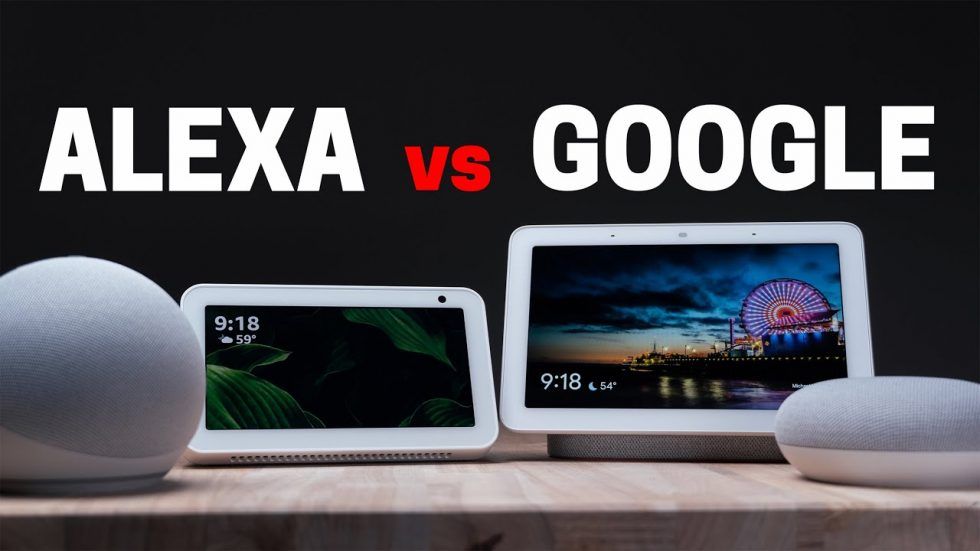
Simply say a trigger word and tell it what you want to listen to, and it starts playing. But they’re also digital assistants that can be used to control smart devices, order products online, and much more. Both Alexa and Google Assistant are pretty good at these tasks, but Alexa can do more things, especially when it comes to controlling smart-home gear. Both assistants offer some form of multiroom audio functionality, including creating groups of speakers via your smartphone. Alexa and Google Assistant also support audio playback from some music services to Sonos speakers, while Google Assistant can communicate with any Chromecast-connected speaker.
Activity on on both platforms will influence the kinds of ads you’re targeted with elsewhere. Questions to Assistant are treated as if you’d entered them on Google Search, so if you ask about engagement rings, don’t be surprised to see wedding-themed ads the next time you open a web browser. You can find Alexa and Assistant on many TVs, some with built-in microphones that eliminate the need to talk to a remote or separate speaker. Currently Alexa can speak English, French, Spanish, German, Italian, Hindi, Japanese, and Portuguese.
Google Home doesn’t have the same level of third-party support as Alexa, but for the vast majority of users it’ll do everything that you need it to. Google Assistant also better ties into Google’s own apps and services -- so if you’re an Android user and use Google Assistant on other devices, the Home is the way to go. In the end, the race was a close one, with Alexa pulling ahead of Google Assistant, thanks to strong performance in the smart home and communications arenas. But Google was certainly no slouch, and the fact remains that both are still strong choices, depending on which capabilities you prioritize.
Google Nest devices also have on-board switches to fully turn off mics for privacy reasons. You can also disable saving any Google Assistant voice commands to your account and delete your audio recordings automatically, similar to what Alexa offers. Google’s Nest Audio is the flagship smart speaker in the series and showcases the Nest design well. The fabric covering, rounded corners, and LED dot indicators are all classic features of these speakers. It stands around 6.9 inches high and comes in a variety of colors, including charcoal, sage, sand, and sky. In 2019, Google revamped its Nest brand with a new focus on privacy — some compatibility partnerships ended, some continued, and some were stuck in development limbo for the foreseeable future.
This guide will explain the core differences between Alexa and Google Assistant and which one you should choose for a smart home ecosystem versus your phone. Shop your favorite products and we’ll find the best deal with a single click. Occasionally, these speakers will be available at discount, although from what we’ve seen, it’s a bit more likely to see deals for the Echo.


No comments:
Post a Comment